

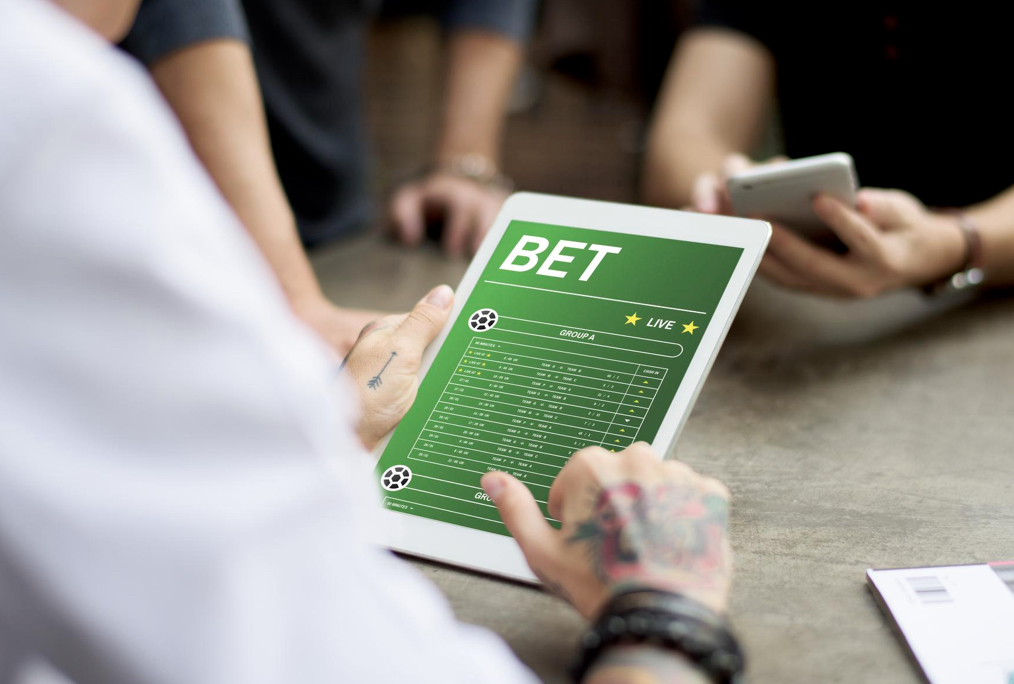
Fans aren’t just spectators anymore, they’re participants. Digital tables now mirror fields and courts, letting players engage with sports in real time. Sports casino games capture the thrill of a tight matchup and transform it into fast-paced, data-driven rounds.
With U.S. gaming revenue hitting new highs in 2025, this fusion has shifted from a niche experiment to a central strategy for major sportsbooks. Here’s a look at how the boundary between stadium lights and slot lights has blurred, and why it’s changing the way we define “real action” in today’s sports economy.
Sports Energy Inside the Lobby
Sports casino games mix licensed teams, quick outcomes, and highlight-driven visuals with core casino mechanics. The league most watched on U.S. TV now backs a free-to-play title featuring all 32 teams, following earlier retail launches that proved how well sports branding fits casino-style play. The crossover offers fans quick, visual highlights that capture the essence of real moments between live games.
This hybrid model is now reaching beyond app-based play. Many of these sports-themed mechanics can be seen at online casino platforms, where real-money titles mirror the same pace, design, and instant outcomes. It’s a natural extension of how sports and gaming continue to merge, turning leagues into year-round entertainment engines and digital lobbies into the new arena for fan engagement.
The Money Map Behind the Rise
Sportsbooks posted a record 13.71 billion dollars in 2024 revenue on nearly 150 billion in handle, and 2025 remains ahead on most trackers. States with mature markets consistently print high single-digit to low double-digit holds each month, whereas large states accumulate multiple two-billion-handle months during football season.
This throughput enables discovery for casino-style sports titles since the wallet and lobby are shared. Every dollar that lands in the app sees both tabs, and that overlap helps casino games capture sports bettors who already trust the platform’s ecosystem.
Parlays and Fast Markets Set the Tempo
Parlays are the engine. In states that break out by bet type, parlays can generate up to two-thirds of revenue while making up far less of total tickets. Operators lean into builders and promos because the math holds.
Live menus continue to expand, with micro markets now operating like casino rounds within a broadcast window. A next-play or next-drive bet settles quickly, creating a fast loop that mimics the pace of a slot spin and keeps players’ attention glued to the action. Savvy bettors recognize how these rapid mechanics can subtly shift the house edge and refresh the betting lobby, changing the rhythm of the game.
Virtual Sports Erase the Offseason
There is no dead zone anymore. Virtual sports run continuously on short cycles, with results updated every minute. Estimates place the virtual sports market at around $21 billion in 2025, with double-digit growth projected into the next decade. This content behaves like slots wearing a jersey, blending the excitement of real sports with rapid, predictable outcomes. It fills calendar gaps, smooths revenue between live games, and gives sportsbooks a dependable schedule for cross-selling other products. The playbook favors titles that refresh outcomes quickly while maintaining the feel of a real match, keeping players engaged and returning for more.
What Serious Players Actually Track
Edges hide in pricing and pace. Parlay hold can spike compared to straight bets, so modeling true probability against posted lines matters more than ever. Live markets reward context and speed, not just pregame reads. States like New Jersey keep posting months with double-digit hold, and the pattern repeats across other mature markets during peak sports windows. With U.S. commercial gaming hitting record highs and omnichannel IP bringing fresh themes into lobbies, the trends suggest that sports and casino mechanics will become increasingly intertwined through 2025.
Sports casino games are not replacing classic moneylines or props. They are expanding their menu to include faster cycles, stronger IP hooks, and always-on content. Records set in 2024 and a hot pace in 2025 make the trend hard to ignore. Expect more official data feeds, more live market depth, and additional virtual formats that settle in seconds. Real rivalries will keep the story loud while the wins feel virtual and instant.
The Lobby is the New Arena
Attention flows to the best shelf space. Placement, pacing, and themed drops turn a basic menu into a revenue engine, guiding players toward high-value content without overt prompts. Operators who treat the lobby like a curated storefront can steadily lift average session value, subtly influencing engagement while keeping the experience enjoyable.
Seasonal skins tied to real-world events, limited-time overlays, and quick paths back into live or in-play action create natural touchpoints that encourage repeat interaction. That is where momentum compounds, transforming small design choices into measurable increases in retention, play frequency, and overall revenue.