
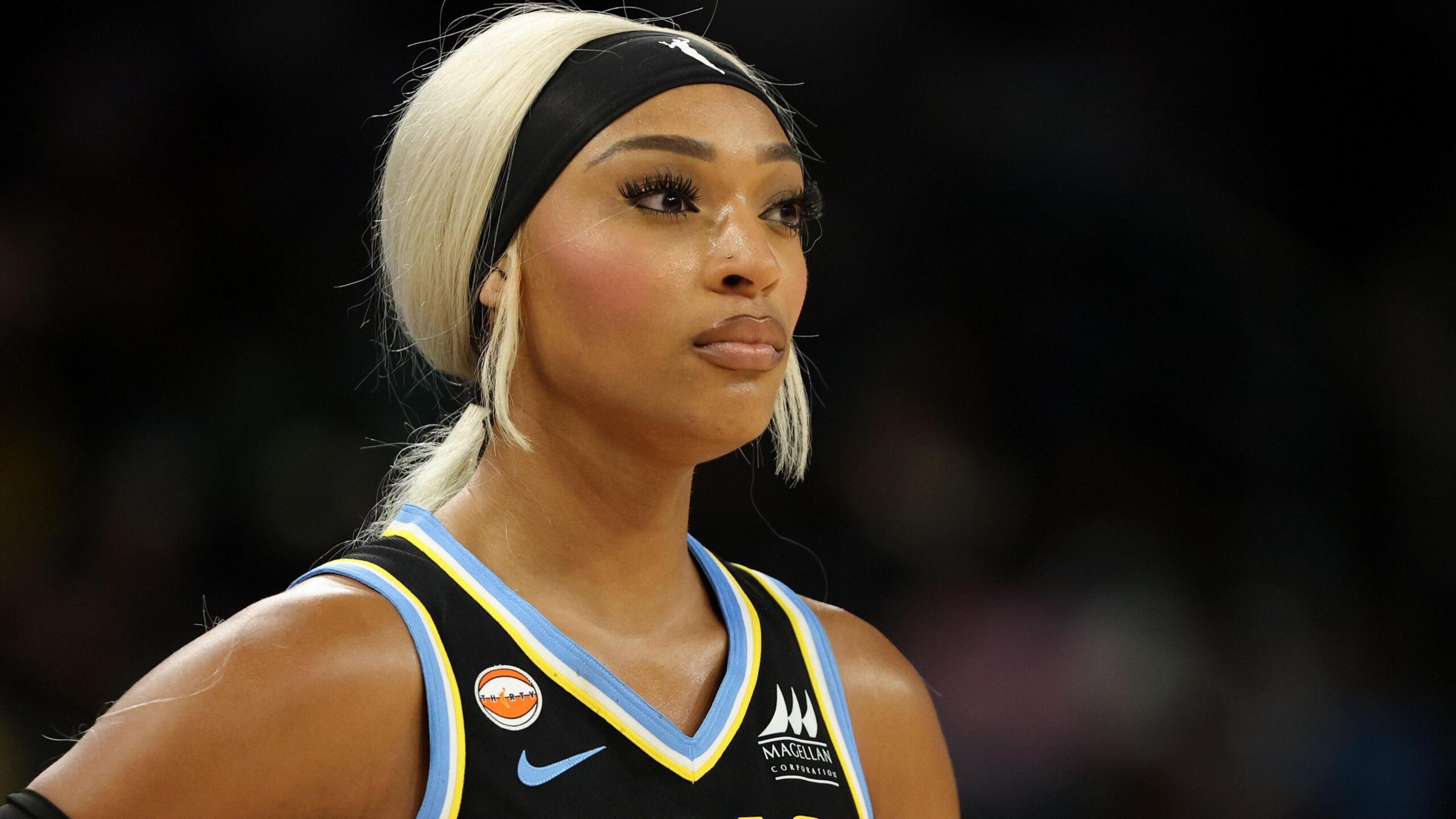
DiJonai Carrington claims that a major misconception about her “WHITE PRIVILEGE” social media post was untrue. The Chicago Sky guard stated that she never asserted that the call of a Flagrant 2 foul against Sophie Cunningham by referees was an instance of white prejudice.
The explanation followed criticism of Carrington’s post by former NFL player Emmanuel Acho, who maintained that the foul call was appropriate. According to Reuters, Carrington retorted that Acho made the presumption that her message was directly related to the officiating judgment.
She stated on Monday that her worries went beyond the one play and that she had already had conversations with others who might be able to assist in bringing about the kind of change she desires.
When Carrington made contact with Cunningham’s head and face while attempting to block a fast-break layup during Chicago’s August 8 game against the Indiana Fever, the argument started. After reviewing the play, officials automatically removed Carrington and raised the penalty to a Flagrant 2.
On his Speakeasy show, Acho discussed the incident and denounced the seeming implication that the unfair decision was influenced by race. Acho stated:
“It was just very ignorant, and to some degree asinine, by DiJonai Carrington to suggest that that call was based on white privilege,”
DiJonai Carrington said that her social media post about White privilege was not about her flagrant 2 foul on Sophie Cunningham on Saturday, but about a desire for “consistency across the board” in officiating, an issue that has sparked controversy throughout the WNBA season.…
— The Athletic (@TheAthletic) August 11, 2026
Carrington disagreed with that interpretation:
“I’ve never once claimed that the assessment of the foul was white privilege (that was your assumption),”
“I would never use that term as a rhetorical weapon knowing the historical and social weight it holds without having the proper evidence to substantiate it,”
Additionally, she refuted Acho’s accusation that her remarks were uninformed by citing her educational background and stating that she was aware of the term’s social and historical meaning.