

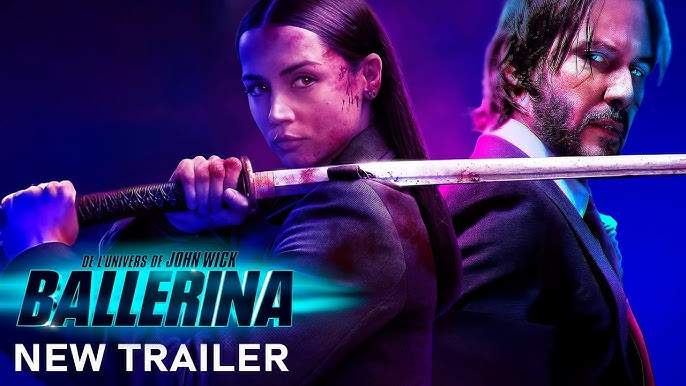
From the World of John Wick: Ballerina” twirls into theaters with a ferocious energy, delivering the bone-crunching action and stylish mayhem fans of the John Wick franchise crave. Directed by Len Wiseman and starring Ana de Armas as Eve Macarro, a ballerina-turned-assassin, this spin-off set between John Wick: Chapter 3 – Parabellum and Chapter 4 is a visual spectacle that thrives on its relentless fight choreography and inventive kills, even if it stumbles slightly in its narrative depth.
The fight scenes are the undeniable heart of Ballerina, and they pulse with a brutal elegance that rivals the best of the Wickverse. Ana de Armas proves herself a formidable action star, blending balletic grace with lethal precision. From a claustrophobic hotel room brawl to a chaotic showdown against an entire town, the choreography is a masterclass in controlled chaos. The stunt work is breathtaking, with Eve wielding everything from ice skates to a flamethrower in sequences that feel like deadly dance routines. The creative kills are a highlight, each one a jaw-dropping blend of ingenuity and gore—think improvised weapons and environmental hazards turned into instruments of vengeance. These moments, like a grenade-fueled takedown or a pirouette into a knife strike, are so well-executed they’ll leave audiences gasping and grinning.
However, the plot doesn’t quite match the kinetic brilliance of the action. The story—a straightforward revenge tale following Eve’s quest to avenge her family’s murder—feels like a familiar tune played on repeat. While it’s serviceable, it lacks the layered world-building that made the John Wick series so captivating. The script, penned by Shay Hatten with contributions from Emerald Fennell, leans heavily on action to carry the film, leaving the emotional beats underdeveloped. Eve’s journey from pain to power is compelling in theory, but the film doesn’t linger long enough to let her inner turmoil resonate. Supporting characters, like Gabriel Byrne’s Chancellor or Norman Reedus’s enigmatic Daniel Pine, are intriguing but underutilized, their motivations and backstories left frustratingly vague. This shallow character development keeps Ballerina from reaching the emotional heights of its predecessors.
One unexpected standout is Keanu Reeves’s cameo as John Wick, which is far more substantial and satisfying than anticipated. Far from a throwaway appearance, Reeves brings his signature gravitas and physicality to a pivotal sequence that ties Eve’s story to the larger Wick mythology. His scenes with de Armas crackle with intensity, especially in a train yard encounter that’s both a nod to fans and a showcase of his enduring badassery. Reeves’s presence doesn’t overshadow Eve but elevates her, hinting at a passing of the torch that feels earned.
Visually, Ballerina is a feast, with Prague’s neon-lit streets and elegant interiors providing a stunning backdrop to the carnage. The sound design—crisp gunshots, thumping kicks, and a pulsing score by Marco Beltrami and Anna Drubich—amplifies the visceral thrill. Yet, the film’s reliance on action over substance means it occasionally feels like a beautifully choreographed routine missing a deeper soul.
In the end, Ballerina is a worthy addition to the John Wick universe, delivering enough pulse-pounding action and creative carnage to satisfy fans. Ana de Armas shines as a fierce new face of vengeance, and Keanu Reeves’s cameo is a delightful surprise that packs a punch. If only the plot and character development had matched the ingenuity of the kills, this could have been a franchise-defining chapter. As it stands, it’s a thrilling, if slightly hollow, ride that earns a solid 7 out of 10 BSO stars.