

In the world of college football, few names carry as much weight as “Manning.” Peyton and Eli Manning redefined NFL quarterbacking with their Super Bowl rings and Hall of Fame careers, while grandfather Archie laid the foundation as a college legend at Ole Miss. So when Arch Manning—Peyton’s nephew and the latest in this quarterback dynasty—emerged as a high school phenom, the media couldn’t resist. Before he even stepped foot on a college field for his first snap, outlets were dubbing him a “generational talent,” the next can’t-miss prospect destined for stardom. But fast-forward to today, August 30, 2025, and after his rocky start in Texas’ Week 1 loss to Ohio State, it’s clear: the hype was not just overblown—it was irresponsible. The media built a myth around a teenager based on pedigree and potential, ignoring the harsh realities of college football development.
The Build-Up: A Hype Train Fueled by Family Name and High School Highlights
Arch Manning’s story started generating buzz long before he committed to Texas in 2022. As a freshman at Isidore Newman High School in New Orleans, he was already turning heads, not just for his arm talent but for that inescapable last name. Media outlets latched on early, painting him as a blend of his uncles’ precision and his own athletic flair. By the time he was the No. 1 overall recruit in the Class of 2023, the narrative had escalated. Pundits called him the most hyped quarterback ever, amplified by his family’s legacy and the modern era of NIL deals. Analysts predicted blowout wins and superstar status, with some even suggesting he was “vastly superior” to established starters like Quinn Ewers, all before he’d thrown a single college pass in a meaningful game.
This wasn’t subtle coverage; it was a full-blown frenzy. The press pushed a narrative of a ready-made NFL first-rounder, ignoring that high school success doesn’t always translate to the speed and complexity of college ball. They crowned him based on highlight reels and bloodlines, setting expectations no teenager could realistically meet.
The Reality: Limited Snaps, Solid but Unspectacular Stats, and a Disastrous 2025 Debut
Arch arrived at Texas in 2023 as a true freshman, but he spent most of his first two seasons on the bench behind Ewers. In 2023, his action was minimal—appearing in just a couple of games with modest stats that showed promise but nothing revolutionary. By 2024, he saw more opportunities, especially when Ewers dealt with injuries. He threw for 939 yards, 9 touchdowns, and 2 interceptions across the season, completing 67.8% of his passes in eight regular-season games. He dazzled in spots, like his 2024 debut against Colorado State where he threw for 95 yards and a touchdown on limited attempts, plus a rushing score. But he also had -38 rushing yards, indicating some mobility but also sacks taken.
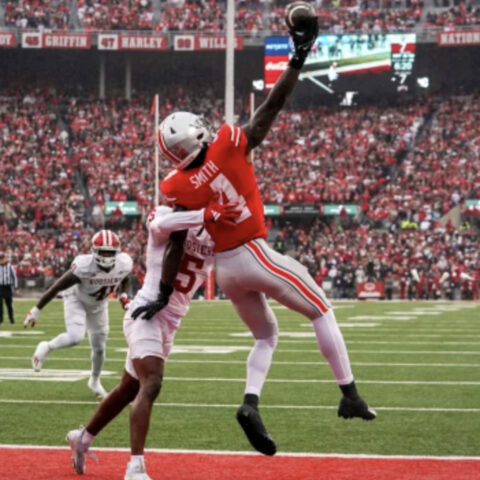
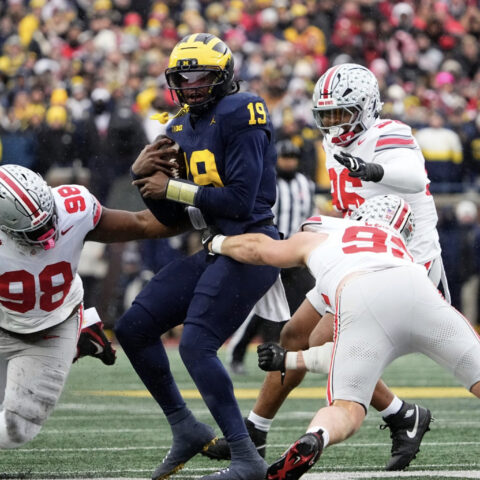
These numbers are fine for a backup developing his game, but they’re far from the “generational” dominance the media promised. He went 2-0 as a starter and earned SEC Co-Freshman of the Week honors once, but that’s hardly the resume of a player who’s supposed to redefine the position. Then came the 2025 opener against Ohio State—a true litmus test. Manning went 17-for-30 (57% completion), 170 yards, 1 TD, and 1 INT in a loss that had fans and analysts reeling. His first half was described as a nightmare, with social media mocking his opening play as the antithesis of “generational talent.”
The Backlash: Media Backpedaling and the Overhype Consensus
Now, with the shine off, the same media that built the pedestal is scrambling. Pundits are backpedaling, nervous about their star QB’s performance. Some have urged fans to abandon the bloated hype train, pointing out how a couple of highlight plays from prior years were used to justify NFL buzz. One analyst bluntly stated, “The hype doesn’t match the tape,” predicting struggles against top defenses like Ohio State’s. Fans have been even harsher, with online forums calling him “very raw” or even “the most overrated college QB of all time.” Some dismissed him as a bust, driven purely by hype. Even family insiders have admitted he couldn’t possibly live up to the expectations. Content creators question why the hype existed in the first place, beyond the surname, while others note his $6.8 million in NIL earnings as a product of that very overhyping.
This isn’t just schadenfreude; it’s a reckoning. The media’s narrative set unrealistic bars, calling his Texas signing a “generational moment” that didn’t align with his actual output. The backlash reflects a collective frustration with a story that was more about clicks than reality.
Lessons Learned: Don’t Crown Kings Before They Play
Arch Manning might still become a great quarterback—he’s only 20, with tools like arm strength and athleticism that could shine with more experience. But the media’s rush to label him “generational” before his first college game was a classic case of putting the cart before the horse. It ignored how many top recruits flame out, how development takes time, and how family legacy doesn’t guarantee success. In hyping him based on high school tape and bloodlines, they set him up for scrutiny that no young athlete deserves.
College football thrives on stories, but let’s base them on performance, not potential. As the 2025 season unfolds, Manning has a chance to rewrite his narrative. Until then, the media owes us—and him—a more measured approach. After all, true generational talents prove it on the field, not in headlines.