

If Marcus Freeman isn’t looking over his shoulder today, he should be.
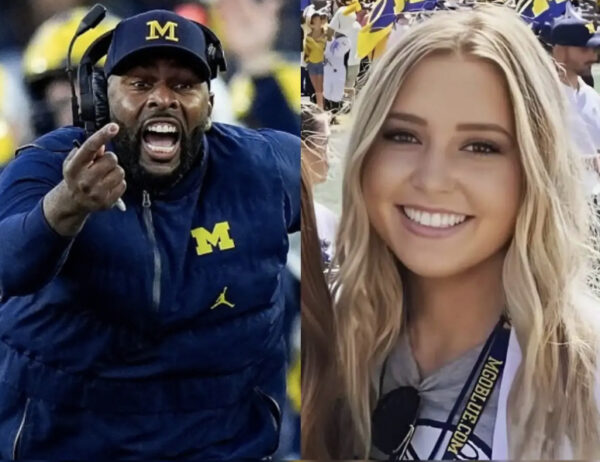
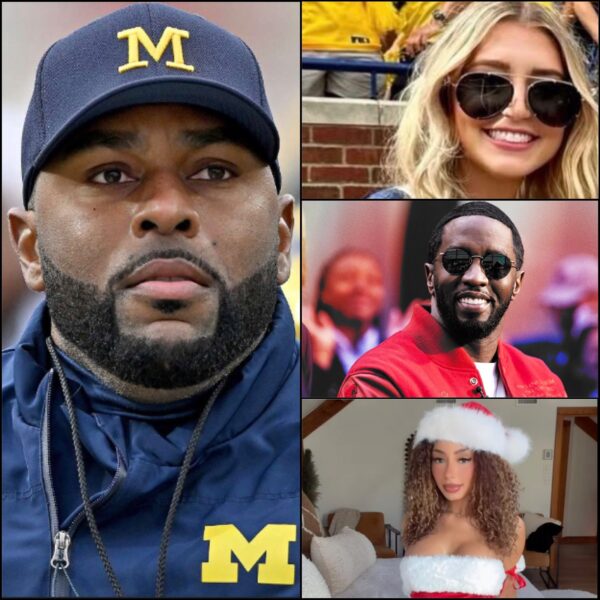
The firing of Sherrone Moore at Michigan—ostensibly for an “inappropriate relationship,” but accelerated by dissatisfied boosters reportedly hiring private investigators to dig up dirt—sends a chilling message that every Black head coach at a blue-blood program knows in their bones:
You do not have a safety net. You do not have a margin for error. And yes, they are likely plotting against you.
Freeman, currently 39 and one of the brightest young minds in the sport, sits in the big chair at Notre Dame. He has been successful, leading the Irish to a 10-win season in 2025. But Sherrone Moore just finished a 9-3 season at Michigan, beat Ohio State, and was fired “for cause” less than two weeks later.
The reality of coaching while Black at a traditional power is that “support” is often an illusion. It is conditional, fragile, and the moment the winds shift, the machinery of the institution turns against you with a speed and ruthlessness that rarely applies to your white counterparts.
The “Short Leash” of History
We have seen this movie before.
-
Tyrone Willingham (Notre Dame): Hired in 2002, he led the Irish to a 10-3 record in his first year. Three years later, after a single bad season, he was gone. He was given zero time to rebuild, while his successor, Charlie Weis, was given a lengthy extension despite mediocrity.
-
Charlie Strong (Texas): From the moment he arrived in Austin, it felt like the booster class was waiting for him to fail. He was never “one of them,” and after three seasons, he was unceremoniously dumped.
The data supports the feeling. Studies and hiring trends consistently show that Black coaches are often hired to clean up messes (glass cliffs), given shorter tenures to fix them, and fired more quickly when they don’t produce immediate championships.
The “PI” Precedent
What makes Sherrone Moore’s situation so terrifying for a coach like Freeman is the reported involvement of private investigators. If reports are true that Michigan boosters spent money to hunt for a “for cause” firing to save $16 million, it changes the rules of engagement.
It implies that at these billion-dollar programs, the powers that be aren’t just evaluating your coaching; they are auditing your life, waiting for a slip-up they can weaponize to void your contract the moment you lose a few games.
Marcus Freeman has been exemplary in South Bend. He says the right things, recruits at an elite level, and represents the university with class. But Sherrone Moore did too—until he didn’t.
Freeman must operate with a level of paranoia that other coaches don’t need. He cannot have a “bad year.” He cannot have a messy divorce. He cannot send a risky text message. Because while a white coach might get a slap on the wrist or a “redemption arc,” history suggests that for Freeman, the first strike will be the only strike they need.
The shadows in Ann Arbor just claimed a victim. Marcus Freeman has to make sure the shadows in South Bend don’t get the same chance.