
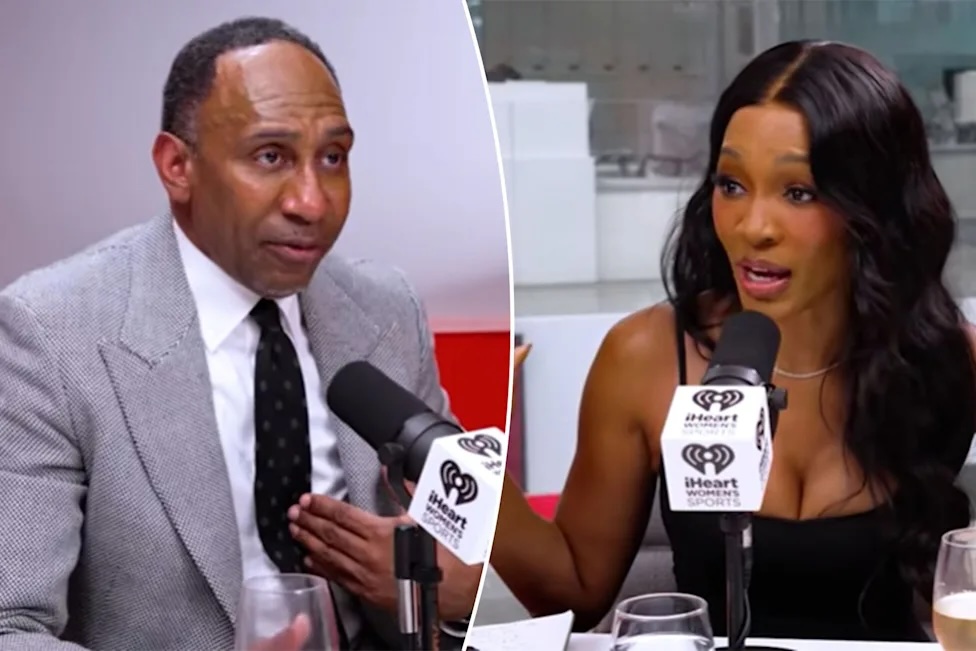
Former ESPN host Cari Champion said this week that texts Stephen A. Smith believed came from her after Molly Qerim left “First Take” were not hers — and Smith conceded on her podcast that he had been corresponding with someone pretending to be Champion.
The exchange unfolded on “Flagrant and Funny,” the podcast Champion co-hosts with Jemele Hill. Smith appeared for a nearly three-hour interview that covered years of friction among former ESPN colleagues. What began as a dispute over credit, hiring and how Champion left the network veered into a more unusual admission: Smith said he had received a message last year from someone he thought was Champion asking to return to the “First Take” moderator chair. Champion said she never sent it.
“When Molly resigned a few months ago, did you not reach out?” Smith asked, according to video from the episode.
“No!” Champion replied. “Molly? Where?! And by the way, when? Where and when?! On text? Please, tell me! How did I reach out?”
Smith said the outreach arrived by text after Qerim’s September 2025 departure from the morning debate show. He described the message as Champion telling him they needed to talk and that she needed “to be back in that seat.” Champion and Hill reacted with disbelief. Champion pulled out her phone and reviewed her message history with Smith on the air.
She said the record did not include any request for Qerim’s job. One message she did send, dated Sept. 16, 2025 — a day after news of Qerim’s exit became public — read: “Sir, it’s Cari. I would like to chat off the record. Call me.” Champion said that was a check-in, not a bid to return to “First Take.” She also said Smith had at times replied “Who’s this?” when she contacted him.
“Stephen A., do you know who’s texting you? Because was that a text? I’m being serious,” Champion said.
Both said they had changed phone numbers in the previous 12 months. Smith said he switched numbers in December, which would have made it harder to retrieve older threads on a former line. Faced with Champion’s denial and the absence of the message she was supposed to have sent, Smith sat back and conceded.
“Then it was somebody who pretended to be her,” he said.
The admission does not identify the sender, how that person obtained a number Smith associated with Champion, or whether Smith still has the original text. Those details were not established on the podcast. What the recording does establish is that Champion categorically denied asking for the job and challenged Smith to produce proof, after which he accepted that an impersonator was the more likely explanation.
The catfishing moment did not arrive in isolation. Champion and Smith had been trading public shots for months before they sat down together.
In November 2025, Champion posted a video criticizing Smith for what she described as uneven treatment of colleagues. She asked why he did not bring the “same energy” and “same smoke” to Michelle Beadle that she said he directed at Black women, including Rep. Jasmine Crockett, Michelle Obama, Hill and Champion herself. She also revived Smith’s 2014 comments on the Ray Rice domestic-violence case, for which ESPN suspended him. Smith answered on his own platforms, telling Champion she should be “ashamed” and arguing he had shown her “nothing but love.” He also said she was hired at “First Take” “in large part because of me.”
That hiring fight returned on the podcast. Champion moderated “First Take” from 2012 to 2015 alongside Smith and Skip Bayless, then moved to “SportsCenter” before leaving ESPN in 2020. Smith has long described himself as an advocate who helped Champion move from Tennis Channel to ESPN and later supported her on air. Champion has rejected the idea that he plucked her from obscurity or that she later begged to return.
“Skip Bayless did not want to hire you,” Smith said on the podcast.
“Neither did you,” Champion replied.
When Smith said she had wanted the “SportsCenter” job and later wanted to come back to ESPN, Champion answered: “That is not true, Stephen A. I know you lying.” Smith said, “We’ll disagree. I don’t lie.”
Champion has said she felt underused on “First Take” and has no fond memories of the chair Smith suggested she wanted again. After his claim about the post-Qerim text, she asked why she would volunteer to return to a role she associated with being diminished.
“Why would I call back for that abuse? Why would I want to sit in that chair and be abused?” she said.
Smith said he had not been aware she felt abused by him and that he did not know she had a problem with him until last year. Champion said her earlier silence had been a form of support.
Qerim’s exit is the hinge of Smith’s original claim. After a decade as host of “First Take,” Qerim announced in mid-September 2025 that she was leaving the show and ESPN. Sports Business Journal first reported that she would not continue past the end of her contract. Qerim said the news came out earlier than she intended. Smith called the resignation abrupt. ESPN then ran a tryout period and named Shae Cornette as Qerim’s replacement.
Smith’s account placed Champion’s supposed text in that window — after Qerim was gone and the moderator job was open. Champion’s documented text from Sept. 16 asked only for an off-the-record call. The mismatch is what turned a personnel anecdote into an impersonation story.
Public figures are frequent targets of fake accounts and spoofed numbers. Smith is one of the most recognizable voices in sports media. Champion is a former co-host whose name still circulates in “First Take” lore. An impersonator using Champion’s identity to reach Smith would have had a plausible hook: old colleagues, a sudden vacancy, and a long-running argument about who helped whom get through the ESPN door. None of that proves a particular person sent the message. It does explain why Smith might have believed it until Champion said, on tape, that she never wrote it.
The episode was billed as a clearing of the air. In some respects it was. Champion and Hill put years of complaints to Smith directly. Smith sat for the questions and, on the text issue, retreated when the evidence in Champion’s phone did not match his memory.
It did not settle the larger argument about Champion’s ESPN origin story, whether Smith blocked or boosted her, or whether her later public criticism was delayed candor or a bid for attention. Those remain matters of competing recollection. Smith continues to say he does not lie. Champion continues to say his version of her career is wrong. The impersonation claim is narrower and, on the available record, less disputed: Champion says she did not ask for Qerim’s chair, she showed messages that do not contain that request, both parties changed numbers, and Smith accepted that someone else used Champion’s name.
Smith has not publicly identified the number he thought belonged to Champion or released the text he described. Champion has not said she has been contacted by the same impersonator. ESPN has not commented on the podcast exchange. Absent those records, the story stops where the tape stops — with a high-profile host concluding, in front of the woman he thought had written him, that he had been talking to a fake Cari Champion.
The “Flagrant and Funny” conversation is available on YouTube and podcast platforms. Part of the draw was always going to be old ESPN baggage. The detail likely to travel farthest is the one neither host planned: even in a business built on taking people at their word, the person on the other end of the text may not be who the contact name says they are.