
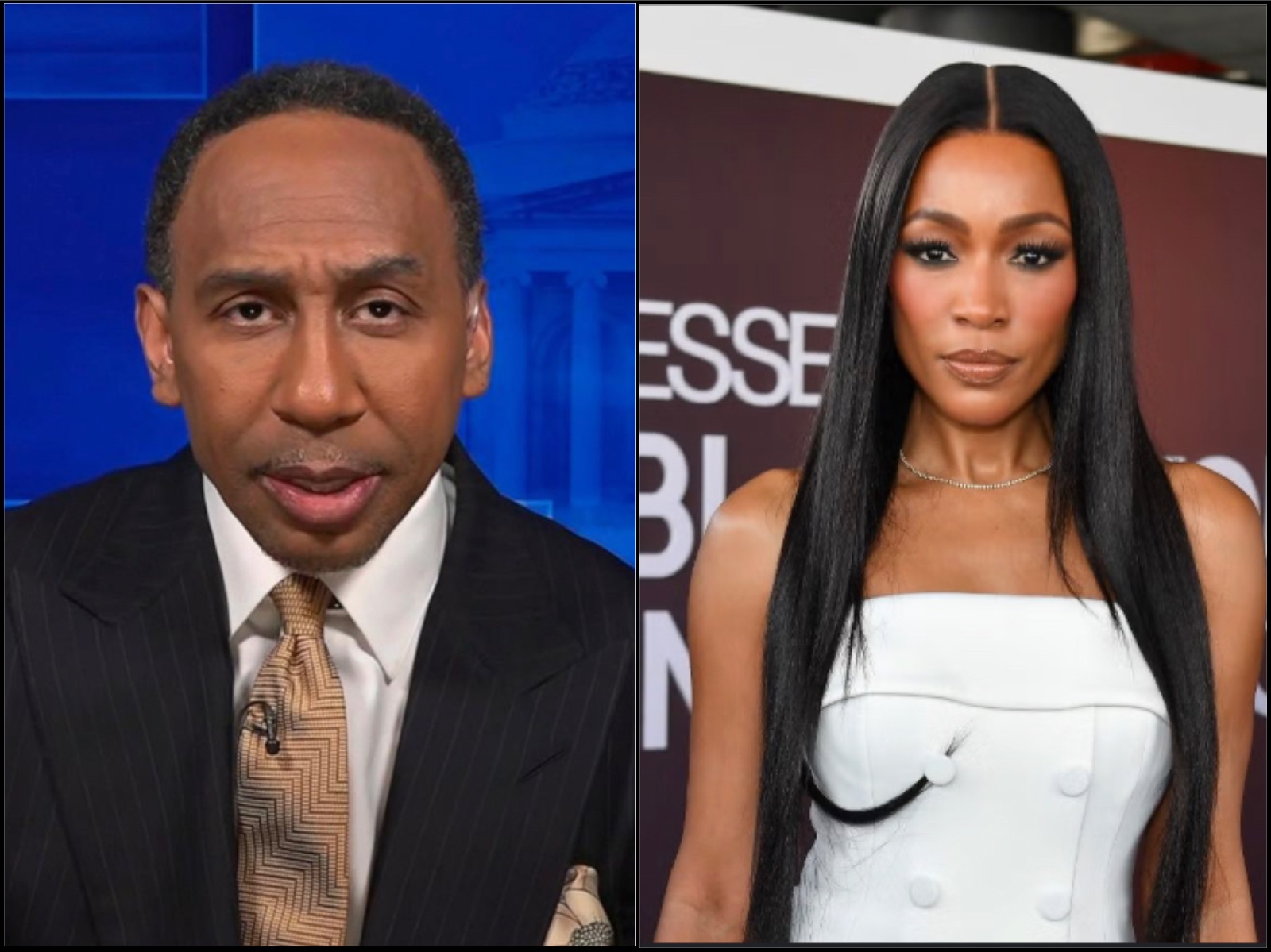
Longtime ESPN personality Stephen A. Smith has reignited and dramatically escalated public feuds with former colleagues Cari Champion and Michelle Beadle, using his platform to directly address their recent criticisms and question their professional conduct and career trajectories. The development marks a significant extension of long-simmering tensions between the prominent broadcaster and two former ESPN figures.
The latest clash originated when Beadle, who previously hosted programs including SportsNation and Get Up, reportedly criticized Smith’s recent endorsement of an app, stating on her podcast that she was “praying for his downfall.” Beadle has a well-documented history of public disagreement with Smith, notably stemming from his highly controversial 2014 comments regarding domestic violence, which earned him a one-week suspension from the network.
Smith, who initially avoided naming Beadle, responded on his SiriusXM radio show by saying some people “talk smack now cause they can’t get a job in the business” and “didn’t do a good enough job when they were in the business,” suggesting they were “desperate” for attention.
The Unanswered Question of the Double Standard
The dispute widened when former First Take host Cari Champion, a colleague of Smith’s during the 2014 controversy, weighed in with her own comments about his history with Beadle. This prompted a direct and highly personal rebuke from Smith on his own podcast and social media.
Smith stated that he was “shocked and personally betrayed” by Champion’s remarks. He questioned her motives and asserted that he was significantly responsible for her hiring and continued support at the network.
“You were hired at First Take in large part because of me,” Smith stated, challenging Champion to provide evidence of him publicly criticizing her or their mutual former colleague Jemele Hill, claiming he has consistently shown her “nothing but love.”
However, in his extended, highly personal response to Champion, Smith notably failed to address the core issue of a perceived double standard often raised by his female critics, particularly Black women.
Champion, and others, have previously questioned why Smith reserves his most cutting, career-questioning “venom” for Black female personalities, while often seeming to let similar or greater professional missteps by white, male commentators go unremarked upon or treated with far less personal fervor.
Smith chose to counter Champion’s comments by focusing on his role in her career, his history of “love” for her, and his perception of her current professional standing. By shifting the debate entirely to a personal narrative—focusing on who “brought her over” from the Tennis Channel and who is “still there”—Smith successfully avoided the more profound, substantive criticism that his energy for on-air accountability is disproportionately directed toward women of color in the industry. The lack of engagement with this fundamental critique allows the perception of a double standard to linger, underscoring the deep ideological rift between Smith and his critics.
The Domestic Violence Context
The underlying tension for both Beadle and Champion frequently traces back to Smith’s 2014 commentary on the Ray Rice domestic violence incident, during which he suggested women should be careful not to “provoke wrong actions.” Smith maintained that his on-air apology then was sincere, but focused on the unintended effect of his words, not a retraction of his overall position.
The current exchange signals an ongoing and acrimonious dynamic between Smith, who is arguably the highest-profile talent at ESPN, and former female colleagues who have often been critical of his commentary and influence, particularly on issues concerning women and race within the media landscape.