

America has always been a melting pot of the races, welcoming people from all round the world seeking new lives for themselves.
As a result, it has one of the most racially diverse populations on Earth. One only has to look at a city like New York to see this in action. Within a population of a little over 19 million it’s estimated that over 200 nationalities are represented.
So it stands to reason that the country’s number one sport, American football, should also show a wide range of racial and ethnic diversity within its ranks.
Along with the college sports scholarship system, it also has a very good record of allowing players from less privileged backgrounds the opportunity to reach the highest level – as well as to become some of the world’s most highly-paid sports people.
How the stats measure up
Looking at the United States as a whole, according to 2021 figures Whites are, unsurprisingly, in the majority at 59.3%. These are followed by Hispanics and Latinos at 18.9%. Third come Blacks at 12.6% of the total population. Then come Asians at 5.9%, American Indians at 0.7%, and Pacific Islanders at 0.7%.
There is also a group consisting of two or more races at 2.3%.
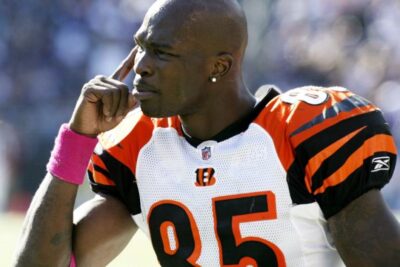
However, when you look at how the ethnicity is divided in American football it is far from a reflection of society in general.
With 24.9% players being white, by far the biggest group of players, at 57.5%, are Black. Even so, you only have to look at the headlines surrounding this year’s Super Bowl to see that the sport may still have a long way to go.
These didn’t only feature details of how New York online operator promos have changes since betting went live in 2019 – important for fans wanting to place a bet on the sport’s biggest annual event.
A great deal was also made of the fact that, for the first time ever, both teams would have Black quarterbacks in the form of Patrick Mahomes and Jalen Hurts. With so many players in teams in general being Black it does seem a little strange that it was so noteworthy, but it also underlines a certain inequality that still exists.
More troubling are the figures for the rest of the ethnic groups playing in the sport. For example, despite Hispanics and Latinos representing 18.9% of the general population, only 0.4% of NFL players are of these ethnicities.
Leading players include the New Orleans Saints’ Chris Olave, a first round pick in the 2022 draft which happened to be a good one for Latino and Hispanic players. Both Malcolm Rodriguez for the Detroit Lions and Matt Corral for the Carolina Panthers were also given their big break.

Asians are also dramatically under-represented at just 0.1% of the playing population and it’s hard to name any that are currently making a name for themselves in the NFL.
Doing rather better are Pacific Islanders at 1.6%. To mark this fact there is even a Polynesian Footballer Hall of Fame that names two players of the year annually. The 2022 awards when to the Miami Dolphins’ QB Tua Tagovailoa and the 49ers’ safety Talanoa Hufanga.
When it comes to Native Americans, the figure is a disappointing 0.2%. But within this small minority there are some reasonably big names including LA Chargers’ Keenan Allen, Kansas City’s James Winchester and the Carolina Panthers’ guard Austin Corbett.
What about the coaches?
One area in which there is undoubtedly a great deal of work to be done by the NFL is in encouraging diversity among the coaching staff.
At the start of the 2022-23 season only three head coaches, or under 10% of the total number, were Black – a shocking statistic especially when compared with the 57.5% figure for players.
This has been a long-standing issue, so much so that the so-called Rooney Rule was introduced as long ago as 2003. This mandated the inclusion of at least one non-white player in all lists of candidates for senior management roles.
But many felt that this was not being administered properly and that often only lip-service was being paid to equality of opportunity.
The fired coach of Miami Dolphins, Brian Flores, even went as far as to lodge a class action against the NFL claiming that the system is rigged against minority candidates.
While the NFL has strenuously denied all charges, the fact that they recently set up a diversity advisory committee may suggest that more changes are on the way.
Another positive sign has come in the form of the season’s International Helmet Decal Initiative that took place in weeks four and five. In this, players were allowed to wear a flag showing their country of heritage on the back of their helmets.
So, while things may not be perfect, they are certainly heading in the right direction – something that we can all support wholeheartedly.