


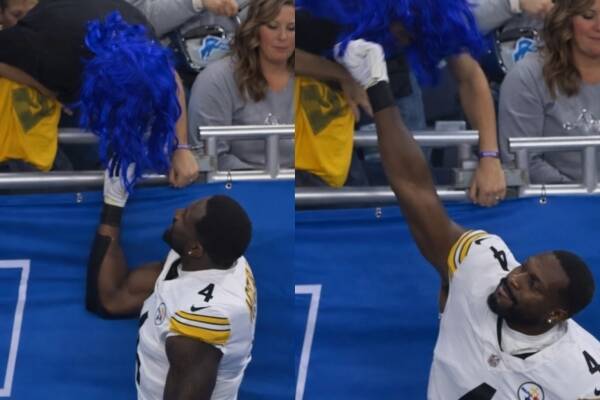
In the high-stakes theater of the NFL, the sideline has always been a thin, invisible line between the gladiators and the paying public. On Sunday, that line didn’t just blur; it was crossed.
The NFL’s decision on Monday to suspend Pittsburgh Steelers wide receiver DK Metcalf for two games following a physical altercation with a Detroit Lions fan at Ford Field is, by the letter of the law, predictable. League policy is clear: players cannot enter the stands or initiate physical contact with fans. Period. But by treating Metcalf’s reaction in a vacuum, the league is inadvertently handing a “get out of jail free” card to the most toxic elements of its fan base.
The Power Shift in the Front Row
The optics of the incident were jarring. Metcalf, a man built like a Greek god, reached into the stands to grab the shirt of a fan—later identified as Ryan Kennedy—and appeared to swing. It is the kind of image the NFL’s PR department has nightmares about.
However, the context matters as much as the contact. Reports from former players like Chad Johnson and sources close to Metcalf suggest the fan allegedly directed racial slurs at the receiver and disparaged his mother. Kennedy denies these claims, but the history is there: Metcalf had previously reported this same individual to security during his time in Seattle.
By issuing a two-game suspension—a punishment far steeper than the typical fine for sideline misconduct—the NFL is sending a clear message to players: No matter what is said to you, you are the only one with something to lose.
The “Untouchable” Spectator
The danger of this precedent is that it emboldens the “heckler’s veto.” When a player is suspended and loses over $550,000 in game checks because they reacted to a personal or racial attack, the fan who instigated the moment becomes a hero in their own distorted narrative.
For the price of a front-row ticket and the lack of a moral compass, a fan now knows they can effectively:
-
Remove a star player from the lineup of an opposing team.
-
Cause massive financial damage to an athlete they dislike.
-
Walk away with a story (and potentially a lawsuit) while the player faces “conduct detrimental” charges.
If the NFL continues to hammer the player while the fan remains a protected “customer,” it creates a stadium environment where fans feel entirely untouchable. It signals that verbal abuse is a part of the ticket price, and any reaction—no matter how human—will be met with the full force of the league’s disciplinary arm.
A One-Sided Accountability
Justice in the NFL often feels like a one-way street. Players are mic’d up, filmed from every angle, and held to “role model” standards. Fans, meanwhile, are often shielded by the anonymity of the crowd until they cross a line so egregious it can’t be ignored.
The Steelers sure dodged a bullet with Pickens. What they really needed was a level headed, no nonsense WR like DK Metcalf. pic.twitter.com/GeoEHnbbl7
— John Tortorelli (@john_tortorelli) December 21, 2025
In this case, the fan wasn’t even ejected during the game. He stayed in his seat while Metcalf’s season—and the Steelers’ playoff positioning—was thrown into jeopardy.
If the league wants to protect the “integrity of the game,” it needs to start protecting its players from the stands as aggressively as it protects the stands from its players. Until the NFL implements a lifetime ban policy for fans who use hate speech or targeted harassment, suspensions like Metcalf’s will only serve to arm the trolls in the front row.
The message today? The customer is always right—even when they’re being abhorrent.


