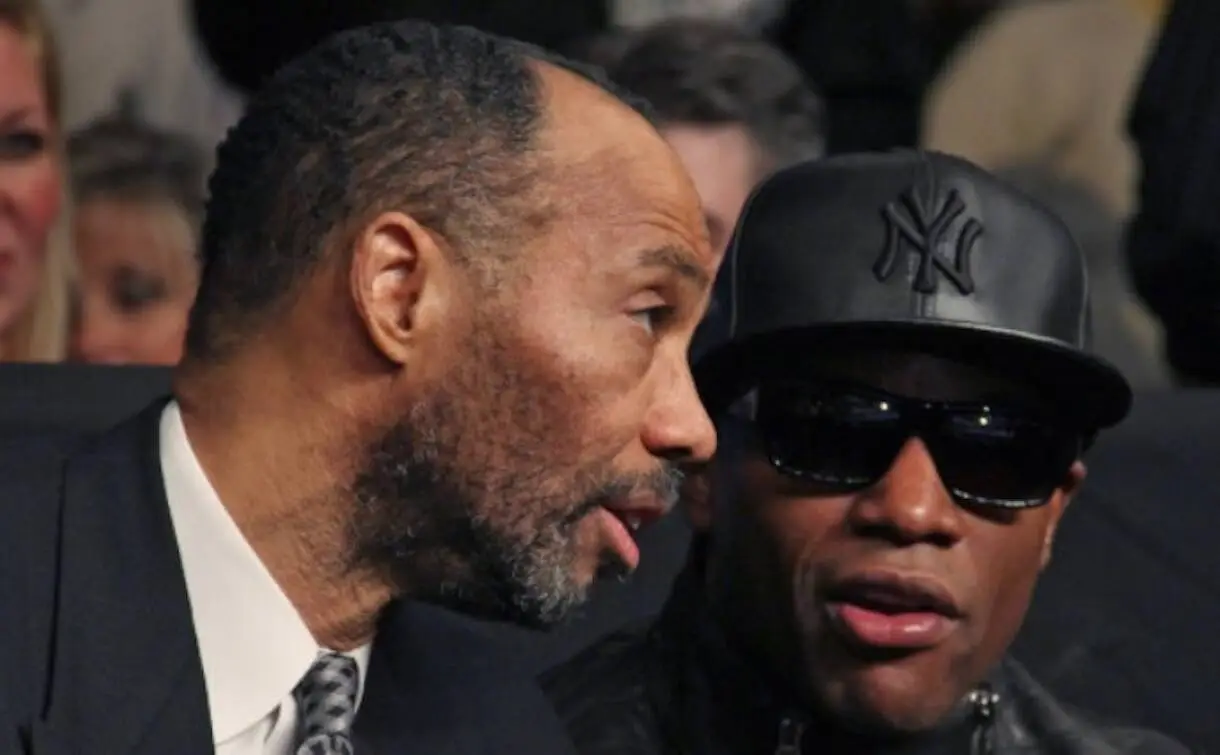
Floyd Mayweather Jr., the undefeated boxing legend known as “Money Mayweather,” has filed a bombshell lawsuit in Los Angeles Superior Court against Showtime Networks Inc. and its former sports president, Stephen Espinoza. Filed on February 3, 2026, the complaint alleges a massive financial scheme that deprived Mayweather of at least $340 million from his career earnings—potentially billions when factoring in lost investment growth. The suit claims Showtime and Espinoza aided a fraud orchestrated by Mayweather’s longtime advisor, Al Haymon, through hidden accounts, unauthorized transfers, and deliberate concealment.
This post breaks down the key accusations from the full 25-page complaint in simple terms (you can read the entire lawsuit document here) Remember, these are allegations—none have been proven in court yet. We’ll start with a dedicated section on Haymon’s alleged role, as he’s portrayed as the scheme’s mastermind, even though he’s not a defendant here.
Al Haymon’s Alleged Involvement: From Trusted Advisor to Accused Mastermind
The complaint paints Haymon, a Harvard-educated music and boxing promoter, as a father figure to Mayweather who abused a position of trust over nearly two decades. Mayweather claims he viewed Haymon as “The Godfather” of his team, relying on him for everything from contracts to personal finances. This created a fiduciary duty under California law—meaning Haymon had to act loyally, disclose everything, and avoid self-dealing. Instead, the suit accuses Haymon of systematic betrayal. Here’s how the complaint describes his involvement:
Early Relationship and Building Trust
- Introduction and Initial Deal: Met in 2004 via mutual acquaintance Sam Watson. Haymon impressed Mayweather with a fighter-first approach, leading to a verbal one-year management agreement in 2005 where Haymon took a 10% fee (favorable compared to the usual 33%).
- Long-Term Reliance: No new written contract after the first year, but Haymon handled all business for 15+ years. Mayweather trusted him implicitly due to his background and claims Haymon worked “for free” out of loyalty—a narrative Mayweather now calls deceptive.
- Fiduciary Role Established: Haymon managed finances, negotiations, and investments, creating duties of loyalty, good faith, and full disclosure. Mayweather, focused on boxing, didn’t demand oversight, enabling secrecy.
Breaches of Fiduciary Duty
- Lack of Transparency: No formal accounting statements provided; records tightly controlled by Haymon and associates like accountant Jeff Morris. Haymon gave verbal reassurances without docs, preventing discovery.
- Self-Dealing and Conflicts: Positioned himself on both sides of deals (e.g., as advisor but also “creditor” via his company, Alan Haymon Development Inc.), transferring funds to himself without consent.
- Gross Mismanagement: Failed to keep proper records, commingled funds, and used outdated methods (faxes over emails) to avoid trails. After a 2023 stroke, key team members (including lawyers) abruptly left, raising suspicions of complicity.
Specific Financial Schemes
- Diverting Earnings: Routed fight revenues to secret accounts (e.g., First Security Bank of Nevada under Jeff Morris) that Mayweather didn’t know about or access.
- Transfers labeled as “repayments” or “loan payoffs” to Haymon’s entities, falsely implying loans Mayweather never received.
- Tens of millions moved shortly after major fights, draining Mayweather’s accounts.
- Unauthorized Payments: Large one-off sums (e.g., $12M, $15M) from Mayweather’s accounts to Haymon or Morris, without approval or clear memos.
- Concealment Tactics: Directed Morris to send only signature pages of docs to Mayweather, explicitly saying “he doesn’t want Floyd to see the documents.” Altered dates on forms (e.g., whiting out and rewriting) to cover tracks, with notes like “We need to cover our ass” redacted.
- Overall Impact: At least $340M “missing” from $1.2B career purses, plus $20M still owed from the 2015 Berto fight (supposedly from Pacquiao proceeds).
Mayweather claims these acts were blatant breaches, tolling statutes of limitations due to concealment. He seeks to hold Showtime accountable for enabling Haymon, but the suit emphasizes Haymon’s betrayal as emotionally devastating, straining relationships and tarnishing his “Money” persona.
Accusations Against Showtime and Espinoza: Enabling the Scheme
The core claims target Showtime (as the broadcaster for Mayweather’s fights from 2013 onward) and Espinoza (who oversaw boxing deals until 2023) for knowingly aiding Haymon. They allegedly diverted funds, hid records, and prioritized Haymon over Mayweather, leading to four causes of action.
Aiding and Abetting Breach of Fiduciary Duty
This claim accuses Showtime and Espinoza of helping Haymon violate his duties to Mayweather.
- Knowledge of Haymon’s Role: Knew Haymon was Mayweather’s fiduciary but ignored red flags like unusual payments far beyond a 10% fee.
- Substantial Assistance:
- Wired earnings (hundreds of millions) to Morris’s account instead of Mayweather’s direct control, delivering money straight to Haymon.
- Failed to question irregular expenses (e.g., $50M+ deductions, $20M Berto payout from Pacquiao funds).
- Stonewalled requests for records in 2024, claiming they were “lost in a flood” or off-site.
- Espinoza’s Personal Ties: Joined Haymon’s Premier Boxing Champions (PBC) in 2023, suggesting motive to keep Haymon happy (e.g., downplayed Haymon’s secrecy in interviews).
- Damages Sought: Full $340M+ liability, plus punitives for willful disregard.
Civil Conspiracy to Commit Fraud
Alleges a coordinated plot between Showtime, Espinoza, and Haymon to defraud Mayweather.
- Agreement and Shared Goal: Implied pact by 2015: Showtime wouldn’t interfere with Haymon’s control, ensuring smooth fights while Haymon diverted funds.
- Overt Acts in Furtherance:
- Routed Pacquiao proceeds to secret account (May 2015).
- Recorded false/inflated expenses to justify withholding money.
- Made misrepresentations by omission (e.g., not disclosing held-back funds) and later claimed lost records.
- Espinoza’s 2023 job with Haymon as evidence of ongoing alignment.
- Unlawful Objective: Fraud via misrepresentation/concealment, benefiting conspirators (Haymon got money, Showtime kept content flowing).
- Damages Sought: Joint liability for all losses, plus punitives for reprehensible conduct.
Conversion (Theft of Property)
Claims Showtime and Espinoza wrongfully controlled and deprived Mayweather of his money.
- Ownership Rights: Mayweather owned fight earnings post-event; Showtime held them temporarily but diverted them.
- Wrongful Acts:
- Directed deposits to non-Mayweather accounts, denying him access.
- Retained funds wrongly (e.g., $20M Berto not paid, improper deductions).
- Refused 2024 demands for return/accounting.
- Intent and Complicity: Intentional actions, even if initially lawful, became conversion via refusal; aided Haymon’s theft.
- Damages Sought: Value of converted property ($340M+), plus interest/lost profits, and punitives for fraud.
Unjust Enrichment (Alternative Claim)
Pled if other claims don’t fully cover; accuses Defendants of unfairly profiting from Mayweather’s losses.
- Benefits Received:
- Use of held funds (interest/float on millions).
- Extra revenues from underpaying Mayweather (e.g., saved $20M on Berto, improper $50M expenses).
- Business gains (subscribers from fights) while shorting Mayweather.
- Espinoza’s career boost (new job with Haymon).
- Inequitable Retention: Benefits from fraud; no valid contract justified keeping them.
- Remedies Sought: Disgorgement of gains, restitution ($340M+), constructive trust on traceable assets.
The Bigger Picture: Damages, Relief, and Implications
Mayweather seeks over $340M in compensatory damages, plus punitives (potentially matching that amount), interest, and costs. He wants injunctions for full accounting, asset freezes, and a jury trial. The suit highlights broader issues in boxing: exploitation of athletes by managers and networks, lack of transparency in mega-fights, and the emotional toll of betrayal.
If proven, this could shake the industry, especially given Mayweather’s $1.2B career earnings. Stay tuned for updates—Showtime has yet to respond publicly.