
Ten years ago, in 2016, I had just moved to Los Angeles. On a Friday night, I was courtside at the then-Staples Center covering the WNBA Finals between the Los Angeles Sparks and their opponents. I tweeted something simple about being there, doing my job, watching elite athletes compete under the bright lights.
The replies came fast and brutal.
“Loser.”
“Why are you wasting a Friday night on this?”
“WNBA? Really, bro?”
Back then, the league wasn’t mainstream. It wasn’t something “serious” media members were supposed to prioritize. It was niche, under-the-radar, easy to dismiss. I didn’t care about the clowning. I’ve been covering sports, all sports, for most of my life. It’s what I do. But that moment stuck with me. It was a reminder of how far the WNBA still had to go in the broader sports conversation.
Fast forward to 2026, and here I am making a decision I never thought I’d make.
For the first time in nearly three decades in this business, I’m going radio silent on the WNBA on social media. No takes. No debates. No threads. No defending players or calling out nonsense. Just… silence.
And it’s all because of Caitlin Clark.
From High School PA Announcer to Three Decades of Sports Talk:
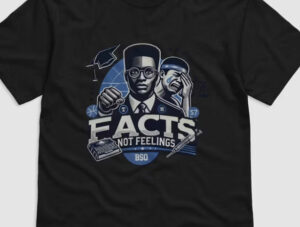
My first sports media gig came when I was 16 years old at Bishop DuBourg High School in St. Louis. I did the end-of-day sports announcements over the PA system. Nothing glamorous, just a kid who loved the games and wanted to talk about them. That spark carried me through almost 30 years: radio, digital, live events, Super Bowls, NBA Finals, boxing, college football, you name it. BSO became an acronym people associated not just with me but with new-age media.
The through-line has always been the same: I could talk about sports and entertainment in an entertaining way. I never shied away from an opinion. I am one of the creators of what we call “Sports Entertainment.” I never felt the need to self-censor because the conversation around a league or player got messy. Until now.
The WNBA has become so toxic that I can’t in good conscience keep feeding the machine.
Stumbling Into Greatness on a Lazy Saturday:
I discovered Caitlin Clark the way a lot of people did, by accident.
It was a lazy Saturday afternoon. I was flipping through channels when I saw the Ohio State women’s basketball team, my alma mater, playing Iowa. I turned it on out of curiosity and nostalgia. What I saw stopped me.
Clark was out there shooting logo threes, dropping dimes, playing with a freedom and flair that felt different. Women’s college basketball had long been an inside-out game, with bigs dominating the paint and physical, grind-it-out basketball. I’d been a fan for years, especially the old Tennessee-UConn rivalries. But Clark played outside-in, like Steph Curry. She stretched the floor, created for others, and made the game look fun again.
She wasn’t the first to push this evolution. Players like Kelsey Plum, Sabrina Ionescu, Paige Bueckers, and others had already been changing the landscape with skill, shooting, and personality. But in Clark’s junior year at Iowa, with that underdog run, it crossed over in a way nothing else had. She took a team farther than they “should” have gone on paper, and people noticed.
She was also feisty as hell on the court, arguing with refs, chirping at opponents, even getting into it with her dad on the sidelines at times. As someone who’s covered basketball my entire career, none of that struck me as unusual. Stars compete with an edge. Michael Jordan did it. Kobe did it. The great ones have that fire. But that same trait would soon be weaponized against her in ways I didn’t see coming.
The Canon Event That Changed Everything:
In comics, there are “canon events” or nexus points — moments that fundamentally alter a character’s trajectory. Uncle Ben dying in Spider-Man. Bruce Wayne watching his parents get murdered in that alley. Once it happens, nothing is ever the same.
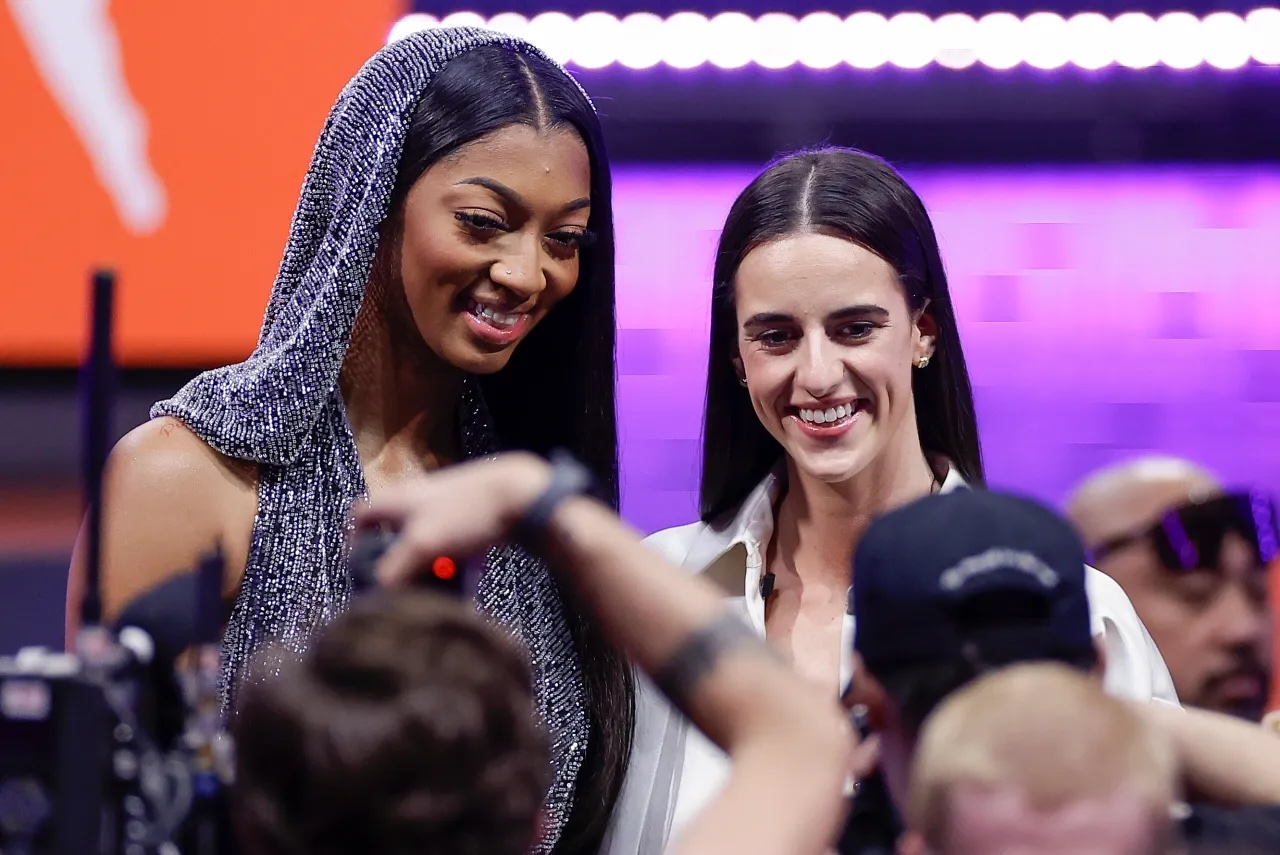
For the WNBA and women’s basketball discourse, that moment was Angel Reese hitting Caitlin Clark with the “You Can’t See Me” gesture and the ring celebration during the 2023 national championship game.
Let’s be clear: Angel Reese was going to be a star with or without Caitlin Clark. Some players just have “IT” that intangible mix of talent, swagger, charisma, and presence. Reese had it long before they shared a court on the biggest stage. She was already a dominant force at LSU, a highly touted recruit who transferred and helped elevate the program. She and Clark had known each other and competed against each other since high school. This wasn’t strangers colliding; it was two competitors with history.
I never had a problem with what Reese did. Clark dishes out plenty of trash talk herself. She’s not some fragile wallflower who wilts under chirping. But that one sequence, in that moment, with those stakes, created a ripple effect we’re still feeling today. It became the spark that lit the powder keg.
Politics, Race, and the “Great White Hope” Narrative:
What followed was a perfect storm no one could have fully predicted.
There was the First Lady’s comment suggesting Iowa should be invited to the White House, a well-intentioned but tone-deaf misstep that poured gasoline on an already smoldering fire. The online venom directed at Reese was disproportionate and ugly. But the bigger, darker shift came later.
Donald Trump won the election.
A country takes its cues from the top down. When the most divisive president in modern American history spends years normalizing hate, anger, and racial grievance, that energy doesn’t stay contained to rallies and cable news. It trickles into everything, including sports.
Clark had lost the national championship, but a rocket got strapped to her back. The attention was massive, organic, and electric. And into that vacuum stepped people with agendas. The MAGA crowd latched on hard, and the reason was as old as sports itself: she was a straight, white woman from Iowa excelling in a sport and league long dominated by Black women, many of whom are part of the LGBTQ+ community.
I’ve covered boxing for years. In combat sports, racial and cultural matchups have always been the biggest draws, Black vs. White, Mexican vs. Puerto Rican, the “Great White Hope” narrative that promoters have leaned into for over a century. Sometimes the Black athlete gets cast as the villain (see: Floyd Mayweather embracing the heel role and making it lucrative). Other times, the script flips. Neither Clark nor Reese asked for this casting. But lines were drawn in the sand anyway. Seeds of the current discourse were planted deep.
I still had hope after the rematch. Clark powered Iowa back to another championship game. The ratings were undeniable. It felt like a slam dunk for the sport’s future.
I was wrong.
Missed Opportunities and Self-Inflicted Wounds:
The WNBA had a once-in-a-generation moment and botched the fundamentals.
First, they should have immediately put Clark and Reese in some sort of promotional program together showing unified support for the WNBA. A commercial that makes light of their college games and promotes their upcoming WNBA rival. Something to calm the growing divisiveness and model unity. The WNBA had the next Bird and Magic sitting in their lap, and instead of cultivating it, they let it fester.
Second, the league failed to have real conversations with players about the changed landscape. Rookies have always gotten tough love. Michael Jordan got frozen out of an All-Star game early on. But this wasn’t a normal rookie class in a normal league. This was a 30-year-old league finally on the verge of mainstream breakthrough. Play hard. Play physical. But don’t actively diminish your cash cow. Don’t block your own blessings. Don’t have the vets in the league speaking negatively about someone who was about to change the financial future of the league. You don’t see NBA players taking random shots at Victor Wembeyana and Cooper Flagg. They still play them tough, but they know that for the betterment of the league, it helps when the young guys are good.
The bigger Caitlin Clark became, the better it was for everyone. A’Ja Wilson was already an MVP, a champion, and the best player in the league before Clark arrived. But when you double or triple your TV ratings, more eyes see Wilson’s dominance. More sponsorship dollars flow in. More commercial viability lifts the entire league. That should have been common sense. Instead, it was a series of mind-boggling, self-inflicted wounds.
When Social Media Turned Basketball Into a Battlefield:
Then there’s the media and social media ecosystem.
For years, WNBA coverage was niche. Low on the totem pole. Not heavily scrutinized. When the league exploded in popularity, it became painfully obvious that much of the media apparatus wasn’t prepared for prime time. Sports media as a whole has been a dumpster fire lately, hot takes over substance, biases over balance, gatekeeping over access. New fans tuning in for Clark, Reese, and others deserved consistent, fair coverage. What they got was often agenda-driven noise.
On social media, it got worse.
There was a time when Caitlin Clark fans, Black, White, and otherwise, were mostly just ball watchers who appreciated the way she played. That changed. Clark and Angel Reese became conduits for conversations that have almost nothing to do with basketball. Hardcore racists champion Clark as a fragile angel who needs protecting. Others frame her entire existence as white privilege and entitlement.
From there, no player is safe from disingenuous agendas. Angel Reese. Paige Bueckers. A’Ja Wilson. Every take comes with an angle. Everything is a proxy war.
It’s not like the NBA, where you can have parody accounts that clown on players like NBA Centel and where fans are in on the jokes. In WNBA discourse, everything is taken deadly seriously. The negativity is suffocating. I’ve found myself not wanting to talk about things I genuinely enjoy simply because the surrounding toxicity makes it impossible to have a normal conversation.
If I say today I didn’t like the Supergirl movie (it was fine by the way), it’s no longer just an opinion; I’m accused of hating women. I’ve seen grown men call a video game “woke” because a Latina is on the cover, even when the game itself is about committing crimes and shooting at cops. Everything is over- and under-exaggerated to the point that the motives of the people giving the opinion have to be questioned. The discourse is broken.
The Dinner Table Question That Brought Clarity:
Even though I like Caitlin Clark as a player, her game is special, and her impact on visibility is real. Like with any player I cover, I try my best to be as unbiased as possible when assessing what I see. It doesn’t feel right to come to her defense when I know legitimate racists are using her as a shield to be racist against Black people, specifically Black women.
That clarity came over dinner with my wife.
She asked a simple question, and it cut through the noise. In that moment, I realized I couldn’t keep participating in good faith, and it is tough not just because it is my job but because I genuinely like talking about sports. Alas, the space had been poisoned by timing, technology, and bad actors on multiple sides. This whole saga happened at the worst possible moment: a hyper-divisive political climate, social platforms optimized for outrage (post-Elon Twitter, Meta’s lax approach to lies, TikTok’s everything-goes algorithm). If this had played out during the Obama years, or even pre-algorithmic social media dominance, it might have been different. The basketball would have stayed the story longer.
But it didn’t. And here we are.
Why Silence Feels Like the Only Honest Play:
For the first time in 20 years, I’m bowing out.
I’ve said it many times: my only real talent is my ability to express myself creatively through words. That’s why I hope people have seen me as a reasonable voice in this crazy sports and entertainment world. But I can’t in good conscience continue engaging with something I know is being used for all the wrong reasons by all parties involved.
My job was never to change anyone’s opinion. It was just to give mine.
And in my opinion, the best thing I can do right now is not give one on this subject again, at least not on social media.
I’ll still watch the games. The talent is undeniable. The growth, despite the self-inflicted damage, is real. New stars are emerging. The league has momentum that even its worst decisions couldn’t fully kill. I won’t let the toxicity kill my enjoyment of watching sports. Maybe in ten years, this will all be a footnote. Maybe once MAGA is gone, we can all start being a little better to each other, both online and offline. I don’t really have the answers, and maybe it’s more my old age than anything else catching up to me. Young Rob would be in the trenches on these topics, but right now I’d much rather spend my time with my family, working on my book, or playing some EA College football.
But on social right now? Radio silence.
Sometimes the most principled thing a voice can do is know when to protect itself and when to stop feeding a machine that’s twisting everything it touches. The ball will keep bouncing. The players will keep competing. I just won’t be adding my words to the noise around it anymore.
That’s not surrender. That’s clarity.