

Football’s constant risk of concussions is the focus of the NFL’s health and safety programs. The sudden end of star athletes’ seasons due to torn knee ligaments makes news. Each squad in the league harbors a constant fear of when their prized asset might turn up injured.
Lower extremity ailments, those annoying and uncomfortable strained muscles in the legs, account for the majority of missed practices and the priceless 17 scheduled games. According to AP news , the NFL has dedicated millions of dollars to better anticipate, prevent, and stop them—as well as their recurrence.
Chief scientific officer of IQVIA, the company that collects health information and provides the league with third-party injury research, Dr. Christina Mack said
“I don’t think a lot of people thought of this as a really big-ticket injury five or 10 years ago,” “While it doesn’t keep them out for the rest of the season, it’s a highly impactful injury that does prevent players from playing. Then they need to manage the injury, their rehabilitation and make sure they don’t have a recurrence. As we talk to the teams about it, we tell them, ‘Reducing strains is a winning strategy.’”
Is there any progress made though?
As a result of fewer leg muscle injuries last season, overall injuries decreased by 5.6%, and preseason injuries in the NFL reached a seven-year low. The league last year increased preseason practice time limitations for the first four days on the pitch and again for the first four days of padded workouts in light of the data gathered and analyzed by IQVIA.
For further analysis during that crucial window, players had to wear biomechanical sensors during the ramp-up periods. Leg muscle injuries reported during the first two weeks of training camp decreased by 26% from 2021, and throughout the whole preseason, they decreased by 16%.
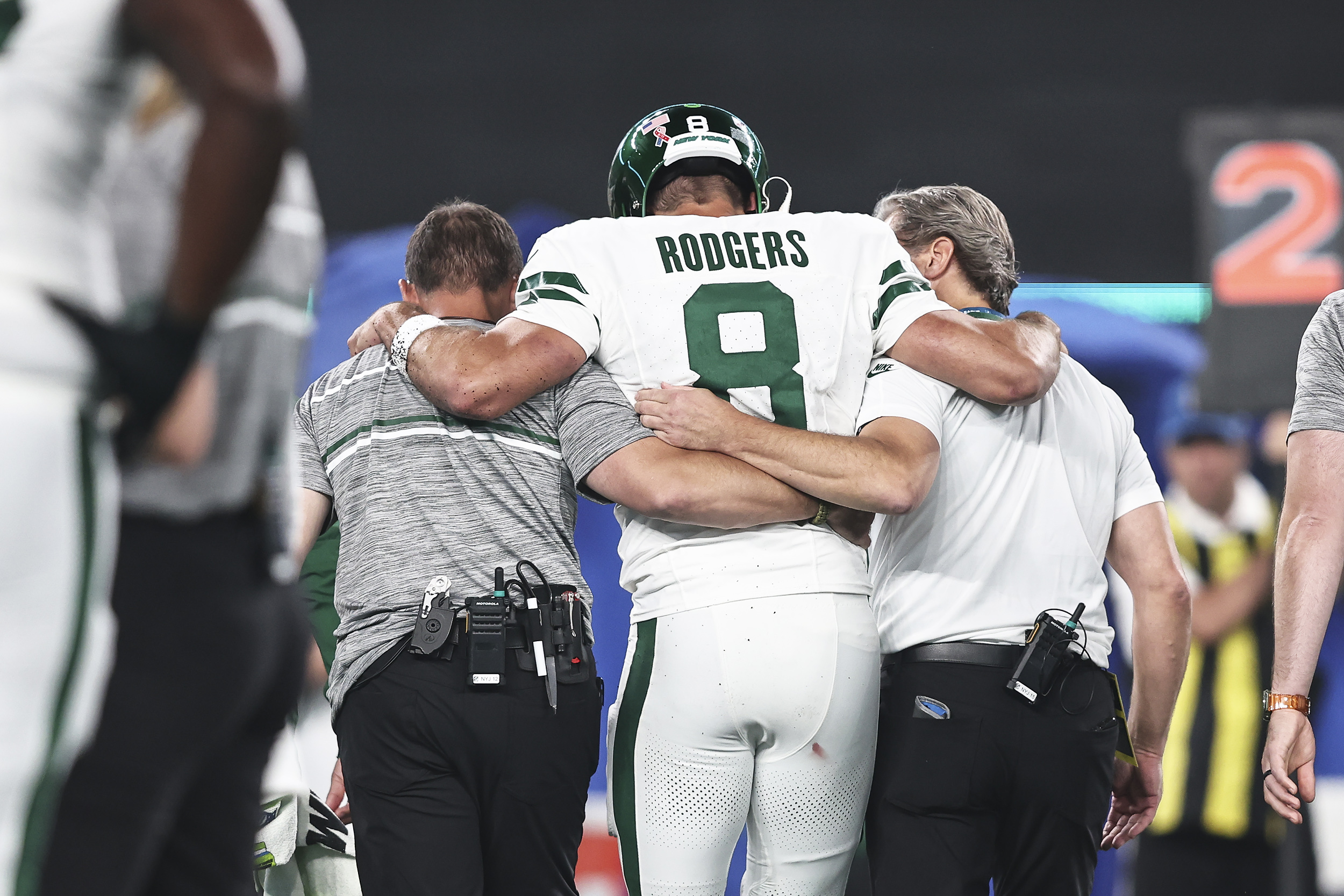
A $4 million grant was given in 2021 for a four-year study of hamstring prevention and treatment that was started by a group led by University of Wisconsin researcher Dr. Bryan Heiderscheit.
The study was launched by the NFL’s scientific advisory board, which was established in 2016 and has spent the majority of its $40 million on concussion research. In the NFL, hamstring problems cause missed time in about three-quarters of cases.
The hamstring’s susceptibility in a fast-paced sport like football can be attested to by anyone who has ever attempted to run quickly without a good warmup. Dr. Bryan Heiderscheit said
“That’s a big change in load on that muscle. It all of a sudden has not experienced that sort of load in quite some time and it may not be ready for it,”
“What we strongly encourage all athletes to do is to make sure they respect speed and train at that full intensity enough where your muscle is conditioned for it.”
Heiderscheit’s team is examining 400 players from BYU, Indiana, North Carolina, Notre Dame, and Wisconsin over the course of three years, using baseline measurements such as sprint mechanics for all participants and more in-depth examinations on players who sustain hamstring injuries, such as MRI scans and post-rehabilitation strength tests.
The data has been de-identified with support from the American Medical Society for Sports Medicine to prevent rival teams from virtually snooping on one another and won’t be widely disseminated until the four-year study is over, according to Heiderscheit.
The hamstring study is only one example of the extensive use of science and technology by the NFL to strive to maintain players’ health as much as possible.