

LOS ANGELES — The 2026 NBA All-Star Weekend arrived carrying the weight of its own reputation.
For the last handful of years, the weekend had become a punchline. Dazzling, yes, but drifting. A weekend of neon lights and hollow possessions.
A celebration of talent that too often forgot competition. It was basketball’s grand festival, but somewhere along the way, the rhythm had softened.
This year, the league tried to promise something different. Not just new uniforms or new graphics, but new stakes. A USA vs. World round-robin format. Shortened 12-minute games. A tournament feel instead of a marathon exhibition. It was a gamble. Another attempt to inject urgency into a showcase that had begun to float.
And for one night, at least, it worked.
All-Star Sunday did not begin like a scrimmage. It began like something mattered. The clock felt louder. The possessions felt heavier. With only 12 minutes per game, there was no space to wander. No luxury of pacing. Players could not wait until the fourth quarter to pretend the moment required effort. The moment demanded it immediately.
There were hands in passing lanes. Bodies absorbing contact. Rotations that felt intentional instead of ceremonial. The game, for the first time in years, had an edge again.
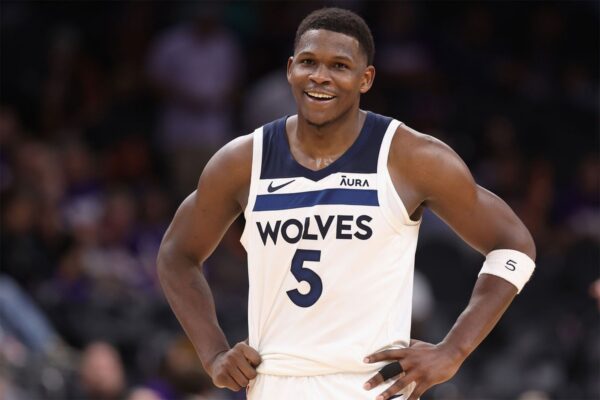
Anthony Edwards played like someone who understood the symbolism. His MVP performance was less about the stat line and more about the posture, aggressive, assertive, unapologetically competitive.
Kawhi Leonard, in front of a Los Angeles crowd eager for something electric, erupted in a scoring burst that felt surgical and swift.
Victor Wembanyama competed with visible emotion, frustration flickering across his face when a late shot sealed defeat for his side. That reaction traveled fast online, not because it was dramatic, but because it was rare. It meant the outcome mattered.
Social media, usually armed with sarcasm by halftime of All-Star games, shifted its tone. Instead of mocking defense, fans were clipping defensive stops. Instead of dismissing the effort, they were debating strategy. For a few hours, the conversation felt different.
And so, for one night, and one night only, Commissioner Adam Silver deserves an applause.
He has faced years of criticism about the weekend’s direction. He has experimented, tinkered, recalibrated. Some changes felt cosmetic. Others felt confusing. This one addressed the root issue: urgency.
By compressing time, the league forced engagement. By structuring the night like a tournament, it created consequence without artificial gimmicks. And at the center of it all, pride was on the line.
The players weren’t just playing for their conference or team. It wasn’t for the name on the back. Every single person represented their country and what is more prideful than that?
Particularly for the US teams who have had to hear for the last few years how the world has caught up to US basketball.
It was bold. It was imperfect. It worked.
But applause in sports is fleeting. One successful Sunday does not rewrite a decade of criticism. Sustainability will be the true test.
The commissioner earned his moment, a rare stretch of near universal approval, but that praise should last exactly as long as the effort does. If intensity fades next year, so will the applause.
Because All-Star Weekend is not just about Sunday.
Saturday night, once the weekend’s crown jewel, struggled to find its glow. The dunk contest, once sacred ground for gravity-defying mythology, felt grounded.
There were quality attempts, yes, but not the kind that freeze time. Not the kind that demand replay after replay. Without true superstar headliners, the spectacle felt lighter than it needed to be.
The three point contest offered steadiness, but not transcendence. The Shooting Stars Challenge, a new addition, flickered between clever and chaotic. The energy never fully matched the promise of the stage.
And then there were the seats.
Cameras, even with careful framing, cannot hide emptiness forever. Pockets of the arena sat quiet, rows of expensive chairs unclaimed. Ticket prices soared beyond the reach of many everyday fans, the same fans who built the cultural engine that powers this league. The optics were unavoidable. In a weekend designed to celebrate the global growth of basketball, the absence of visible fullness told its own story.
All-Star Weekend has always been theater. Fashion tunnels. Celebrity sightings. Branded lounges. Exclusive parties. It is as much cultural summit as sporting event. But theater depends on audience. And when the audience feels priced out, the spectacle risks becoming insular, vibrant on camera, distant in spirit.
Still, the weekend was not hollow.
There were moments, real ones. Buzzer-beaters. Emotional reactions. Short bursts of brilliance that cut through the cynicism. For stretches, the weekend felt like a celebration again rather than an obligation.
But tension lingers beneath the surface.
Is this format a lasting solution or a temporary jolt? Can mini-games maintain their urgency once novelty fades? Will stars continue to embrace intensity when the calendar turns and fatigue settles? These questions hover quietly above the praise.
The truth is complicated. The 2026 NBA All-Star Weekend was neither a complete revival nor a failure. It was a recalibration. A reminder that the event is not beyond saving but also not beyond criticism.
What it proved is that structure matters. Incentive matters. Pride, when given the right conditions, still exists. The players did not suddenly rediscover talent; they rediscovered urgency.
And that matters.
For the first time in years, fans left discussing moments instead of mocking effort. They debated format rather than apathy. They argued about sustainability rather than inevitability. That shift in tone is meaningful, even if fragile.
The weekend did not solve every issue. The dunk contest still searches for its next iconic chapter. Accessibility remains a concern. The balance between spectacle and substance continues to tilt uneasily.
But there was a pulse.
For one weekend, not flawless, not transcendent, but undeniably more alive, the NBA’s midseason celebration felt closer to its purpose. It felt competitive. It felt emotional. It felt like basketball again.
The 2026 NBA All-Star Weekend will be remembered not as perfection, but as proof. Proof that when urgency is engineered and pride is embraced, the spectacle can regain substance. Proof that innovation, when aimed at the heart of the problem, can spark something real.
For one night, the commissioner earned applause. For one weekend, the players carried pride. For one stretch of February, the All-Star Game stopped drifting and started competing.
Now comes the harder part.
Keeping it that way.