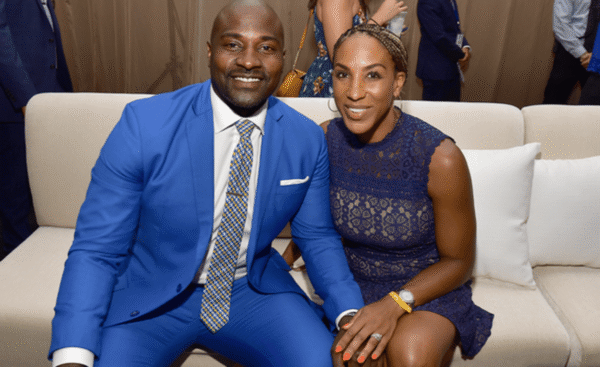


Barely 14 months after Mark Walter completed his record $10 billion purchase of a majority stake in the Los Angeles Lakers from the Buss family, the billionaire financier is selling the franchise again.
The buyers are former Disney CEO Bob Iger and venture capitalist Joshua Kushner, according to multiple reports. The deal values the Lakers at a staggering $12.5 billion — a $2.5 billion profit for Walter in roughly a year.
Walter, who also controls the Los Angeles Dodgers and the WNBA’s Los Angeles Sparks, described the ownership as “one of the great honors of my life” and “an extraordinary investment.” In a statement, he expressed gratitude to Jeanie Buss, the Buss family, players and staff, adding that the Lakers “belong to Los Angeles.”
Iger and Kushner called themselves “lifelong NBA fans” who are “deeply honored” to become stewards of the iconic franchise. Kushner, younger brother of Jared Kushner, previously held a minority stake in the Miami Heat and has other sports investments. The pair had been exploring an NBA expansion team in Las Vegas before pivoting to the Lakers with an aggressive offer that reportedly came together in a matter of days.
The speed of the exit has stunned the sports world and fueled intense speculation. Why buy one of the NBA’s most prestigious franchises at a historic valuation and then cash out so quickly?
The official story vs. the swirling theories
The simplest explanation is pure business: An unsolicited $12.5 billion valuation proved too lucrative to refuse. Walter never publicly shopped the team. Sources familiar with the talks said he was not initially interested in selling until the number became impossible to ignore.
But the timing has invited darker interpretations, especially as details of Walter’s other challenges have surfaced in recent weeks.
Federal prosecutors in the Southern District of New York and the Securities and Exchange Commission are investigating insurance companies controlled by Walter — Delaware Life Insurance Co. and Clear Spring Life and Annuity Co. — along with aspects of Guggenheim Partners, where he serves as CEO. The probe centers on roughly $16 billion in private-credit loans and related-party transactions that may not have been properly disclosed to regulators.
An internal whistleblower complaint helped spark the scrutiny. The insurers later reclassified large portions of their investments after receiving grand jury subpoenas, jumping reported affiliated holdings from about 3% of assets to roughly 40%. Investigators are examining whether the structure allowed funds to flow in ways that obscured ties to other Walter entities. No charges have been filed against Walter or his companies.
Separately, the Wall Street Journal reported that Walter suffered a stroke during the Dodgers’ 2024 World Series run. He was notably absent from some championship celebrations that fall. Opinions inside his business circle differ on whether lingering effects have affected his decision-making or acuity, though a company spokesperson has strongly rejected any suggestion that he lacks the capacity to lead.
These developments have given rise to several circulating theories about the Lakers sale:
- Liquidity under pressure: Selling a high-profile, non-core asset generates substantial cash that could help address loan concerns or shore up the broader portfolio while the federal review continues. Recent reporting indicated TWG Global has sought capital from outside investors to pay down scrutinized loans.
- Reducing regulatory and public spotlight: NBA ownership brings intense media and league scrutiny. Offloading the Lakers allows Walter to step back from one high-visibility role while retaining the Dodgers, Sparks and other holdings. Sources have said he has no plans to sell the Dodgers.
- Health and succession considerations: The stroke reports, combined with the rapid profit-taking, have led some observers to question whether personal health factors accelerated a desire to simplify the empire or lock in gains.
- Pure opportunistic flip: Proponents of this view argue Walter simply recognized an extraordinary offer from deep-pocketed buyers who were already assembled for an expansion bid and pivoted. In this reading, the investigations and health matters are coincidental background noise.
None of these theories has been confirmed by Walter, his representatives, the NBA or the buyers. Company statements have emphasized cooperation with authorities and confidence that the matters will resolve favorably. The Lakers themselves are not a target of the probe.
Broader context and implications
Walter first acquired a 27% minority stake in the Lakers in 2021. He completed the controlling purchase from the Buss family in late 2025 after NBA Board of Governors approval, with Jeanie Buss remaining as governor for at least five years and the family retaining a minority stake.
The franchise has changed hands twice in less than two years after more than four decades under the Buss family. The rapid valuation jump — from $10 billion to $12.5 billion — underscores the frothy market for premier NBA assets, even as it leaves fans and observers searching for deeper explanations.
For now, the official narrative remains that this was a straightforward, highly profitable transaction driven by an exceptional offer. The alternative theories, while circulating widely in the wake of the federal investigations and health reports, rest on timing and circumstance rather than direct evidence linking those issues to the decision to sell.
The NBA still must approve the new ownership group. Until then, the Lakers remain in transition — again — while the questions surrounding Walter’s brief tenure as majority owner linger.